Academics
Teaching for Understanding
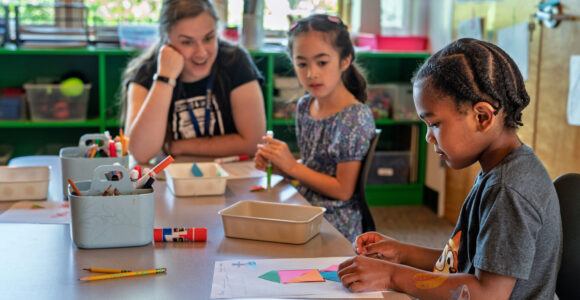
Children at UCDS construct their own understanding. Although young children do not always articulate what they understand, they are constantly testing out their theories to make sense of how things work. The sanctity and importance of each child's personal work to make sense of the world is a non-negotiable core value that teachers and parents have shared from the inception of the school. Teachers share a conviction that all children are naturally curious and want to learn. It is the job of the teacher and parent to facilitate that learning. The classroom is set up as a laboratory for the child to conduct his/her research and the teacher acts as a coach to the child. The child is working fundamentally to please him/herself, rather than working to please the teacher. Children in our school own what they are doing and exhibit an agency that is not always seen in traditional, teacher led classrooms.
Inquiry
Inquiry is a central organizing principle when children are able to construct their own understanding. We expect that both teachers and students will generate questions and learn how to investigate to gain understanding. Learning is an important product of this focused investigation; academic skills are embedded in the context of this meaningful work. Part of the process of inquiry is reflective: What do I know? What do I understand? Where am I now? Where do I want to be? What are the next steps? Reflective learners develop thinking habits that make them better at learning. In our classrooms, the teacher models thinking, planning, risk taking, implementing, and reflection.
Collaboration
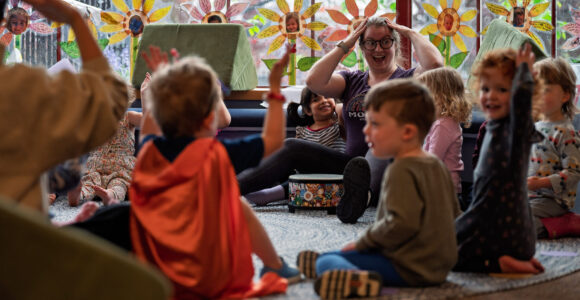
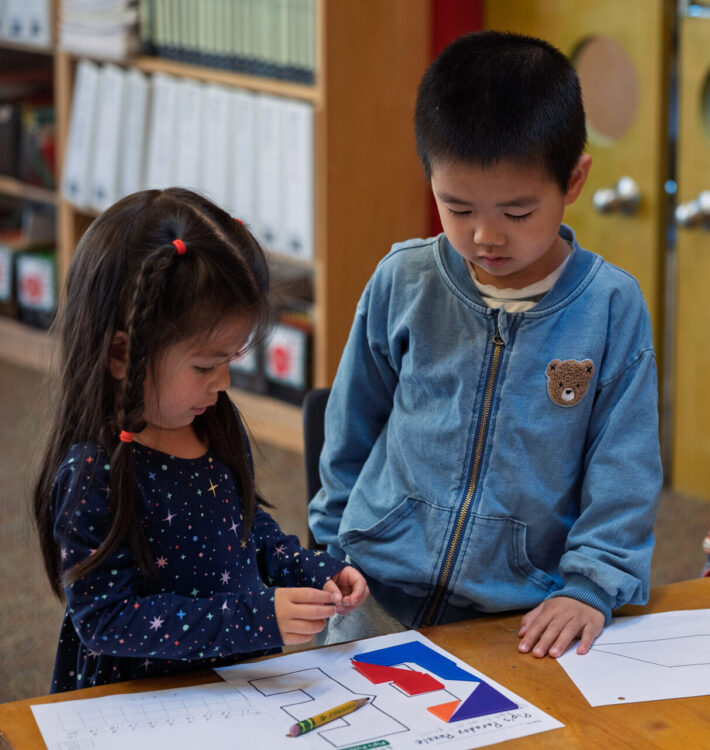
Collaboration is a vehicle for the civic responsibility we want our students to develop. To participate effectively in a democratic community, children need to learn to engage in dialogue. We think it is vital for children to learn to explain their own thinking, to consider another point of view, to build on someone else's idea, and to reconsider their own thinking based on feedback from others. Teachers expect children to collaborate to solve problems, to plan activities, and to work together on whole class projects. Children are also expected to consult classmates whenever they need feedback or another idea for approaching a problem. In this way, children are exposed to multiple strategies for solving a problem and become more flexible in their thinking. Children learn to assume leadership at the same time that they assume responsibility for the needs of others in the group.
Individualized Instruction
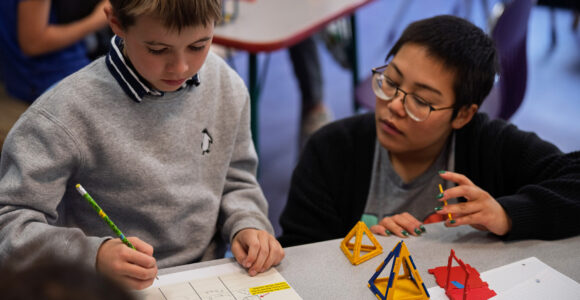
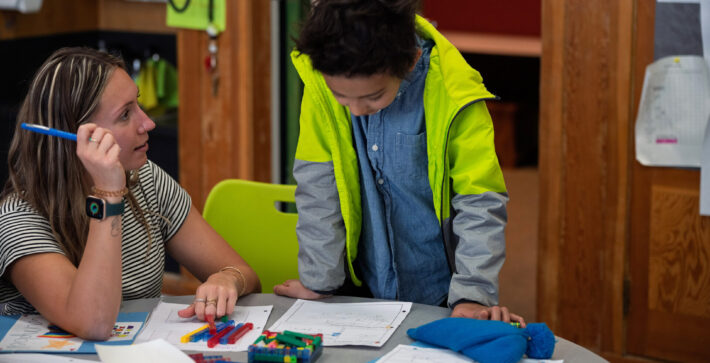
Given the opportunity to construct their own understanding, children will learn differently. Each child has unique talents, ways of thinking and levels of understanding. We anticipate that children will learn at different rates and expect that children of the same chronological age will be at different places in their social, emotional, and physical development. Each child brings to the classroom a set of prior learning experiences and values from their family and community. We believe that all of these differences are important to our understanding of who a child is and how he/she makes sense of the world. The job of the teacher is not to create a single perfect curriculum or a spectacular lesson, but rather to observe individual children carefully to create instructional strategies based on what a child needs.